 de
de
Apps (iPhone, iPad & iPod):
 great white shark
 sharks
 seabirds
Scientific shark articles
Alaska & Wildlife
Arctis
Birds
Cities
Egypt - Land of the Nile
Fauna & Flora Fiji
Fiji sharkproject
Mountains
Nature
Polar bear
Sea
Seabirds
Sharks
Southern Right Whale
Underwater
Wildlife South Africa

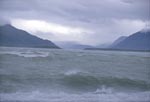
Storm on the Naknek Lake in Katmai National Park. From the Shelikof Strait ago suddenly icy storms, called "Williwaws" come with high wind speeds.
On hiking tours in the Katmai National Park you should be well equipped. Often ice cold storms are suddenly coming from the Shelikof Strait without warning, the so-called williwaws with high wind speeds. The weather at the bottom of the Katmai Mountains is very changeable. At the Naknek Lake, which is 110 kilometres long and has an average breadth of approx. 30 kilometres, once I experienced such a sudden fall in temperature. Just a few minutes ago there was bright sunshine and a water surface as smooth as glass, and then, within a few minutes, the lake seemed to be one inferno. The storm lasted for two days and you could see nothing but metres high waves with white crests. The wind speed was 90 miles per hour. In such a case you’d better not travel by canoe…Several days of rain, cold and storm demand everything of a tent and of the whole equipment.The danger of hypothermia shouldn’t be underestimated. On one night at the McNeil River we experienced how some participants’ tents collapsed during a sudden change in the weather. With our alpine tent we had no problems at all.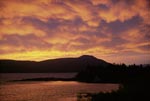




|