 de
de
Apps (iPhone, iPad & iPod):
 great white shark
 sharks
 seabirds
Scientific shark articles
Alaska & Wildlife
Arctis
Birds
Cities
Egypt - Land of the Nile
Fauna & Flora Fiji
Fiji sharkproject
Mountains
Nature
Penguins & seals
Polar bear
Sea
Seabirds
Southern Right Whale
Underwater
Wildlife South Africa

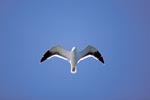
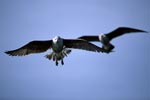
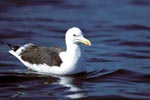
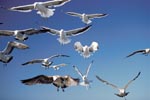
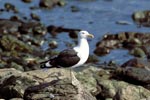
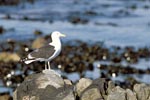
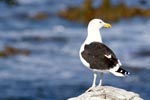
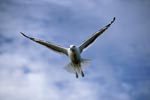
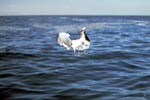
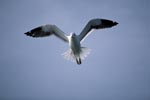
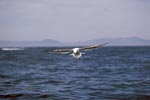
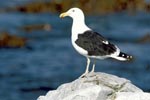
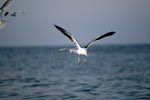
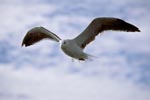
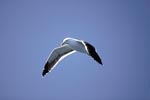
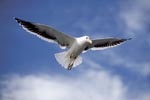
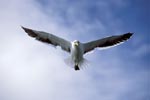
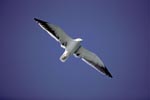
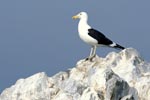
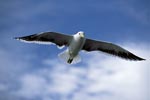
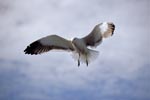
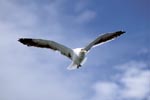
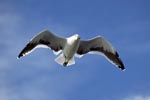
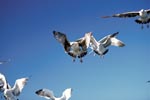
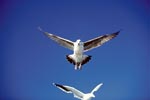
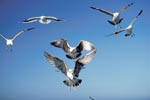
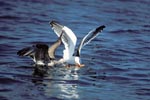
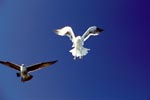
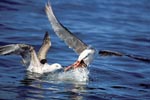
Photos of Kelp gulls (Larus dominicanus) on Dyer Island, swimming on the water and flying over the sea. are aggressive predators.
Kelp Gulls (Larus dominicanus) breed in Namibia and South Africa. There are large colonies between Cape Cross and Algoa Bay. According to an estimation, 11,000 Kelp Gull pairs live in southern Africa. Kelp Gulls are aggressive predators on the islands near the coast. On every occasion they rob the eggs and the young birds of the African Penguins, Cape Gannets, cormorants, terns and Hartlaub’s Gulls. The penguins suffer especially from the Kelp Gulls. In the past, the penguins had a safe home: their nesting caves were built into the guano. But already in the 19th century the guano was almost completely mined and now the penguins are forced to nest on the dangerous ground. During 40 days – alone the hatching of the penguin egg takes this time -, extreme watchfulness is necessary against the predators from the air. For a successful breeding, the guarding of the chicks may never let up, because the penguin chick t is extremely in need of protection.Larus dominicanus
IUCN Red List of Threatened Species
| page 1 of 3 | page 2 -> |
| page 1 of 3 | page 2 -> |