
 de
de
Apps (iPhone, iPad & iPod):
 great white shark
 sharks
 seabirds
Scientific shark articles
Alaska & Wildlife
Arctis
Birds
Cities
Egypt - Land of the Nile
Fauna & Flora Fiji
Fiji sharkproject
Mountains
Nature
Penguins & seals
Polar bear
Sea
Seabirds
Sharks
Underwater
Wildlife South Africa

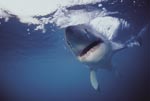
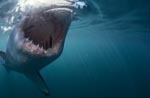
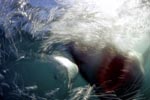
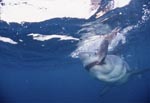
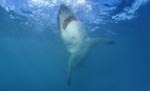
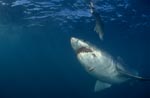
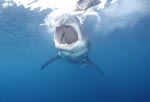
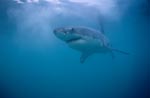
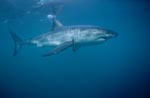
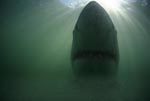
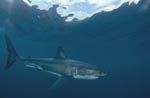
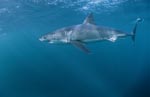
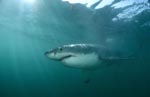
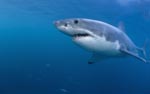
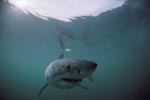
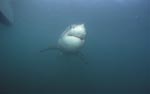
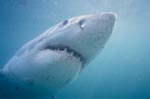
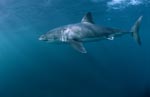
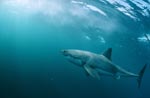
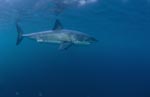
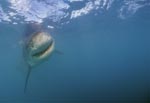
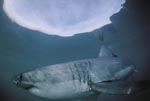
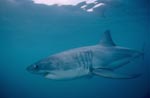
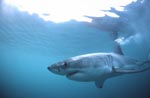
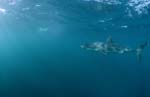
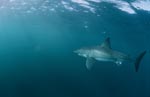
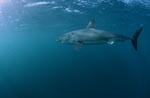
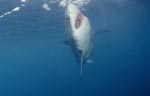
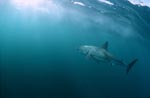
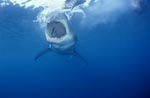
Photos of the Great White shark over the water surface and under water, in front of Dyer island, a place, where world-wide the White shark can be best observed.
Out of nowhere it emerges noiselessly from the depths, and the sight of the triangular backfin causes panic, wherever it is seen. For humans, the attack of a shark seems to be the worst nightmare and the most feared natural threat at all. If the name of the Great White is mentioned, it is usually immediately associated with its open scary mouth, lunging at an unsuspecting swimmer – just as the film shark. But is this reality?Long ago, scientists refuted the horror attacks shown in the movie “Jaws“,
as well as the randomly man-eating beast. But the “monster with the murderer’s image“ is mercilessly hunted all the same – for the ego and because of hatred. “Jaws“ and the shark hatred resulting from it have shown a disastrous effect, and the existence of the White Sharks is threatened. It is uncertain if the populations of the Great White will ever recover. In an unprecedented hounding, the Great White Shark was eliminated so dramatically, that nowadays some scientists hold the view that the Great White Shark is already biologically extinct.
Despite the prohibition of fishing in the main ranges, the Great White Shark is still hunted. To get a realistic impression of shark attacks, you can obtain information in the Internet from the following address:
"International Shark Attack File" http://www.flmnh.ufl.edu/fish/Sharks/ISAF/ISAF.htm
Of 50 to 100 accidents with sharks every year worldwide, 5 to 15 have fatal consequences.
In the USA, every year more people are killed by dogs than in the past 100 years by White Sharks. Sharks are wild animals, and a Great White Shark can certainly become dangerous to the human, but it is by no means a man-eater. If it is not too late yet, the ruler of the sea can only survive if he is protected globally.
Peter Benchley, the author of the book “Jaws” is now fighting for the protection of the “Great Whites“ (Carcharodon carcharias) and speaks of “exquisite creatures of the evolution“. “I am an animal-rights activist”, he says, “and I would not be able to write such a book nowadays”.
Sharks have already existed in the oceans for 400 million years, and it is us, the
humans, who hunt these fascinating animals unscrupulously, until they are eradicated. Further detail information on sharks:
The American Elasmobranch Societe
http://www.flmnh.ufl.edu/fish/Organizations/aes/aes.htm
or the Shark Foundation www.shark.ch
Biological Profile
Carcharodon carcharias
IUCN Red List of Threatened Species
| page 1 of 16 | page 2 -> |
|
|
| page 1 of 16 | page 2 -> |